 By Liv Tyree
Most people think of stress in terms of long workdays or major emotional pressure, but the human body actually deals with dozens of micro stresses throughout the day. These stress surges happen in seconds and demand immediate physical and neurological responses. Examples include catching your balance on a slippery pavement, sprinting briefly to make the MRT, lifting a heavy object quickly, recovering from a misstep, or reacting instinctively when someone brushes past you in a crowded walkway.
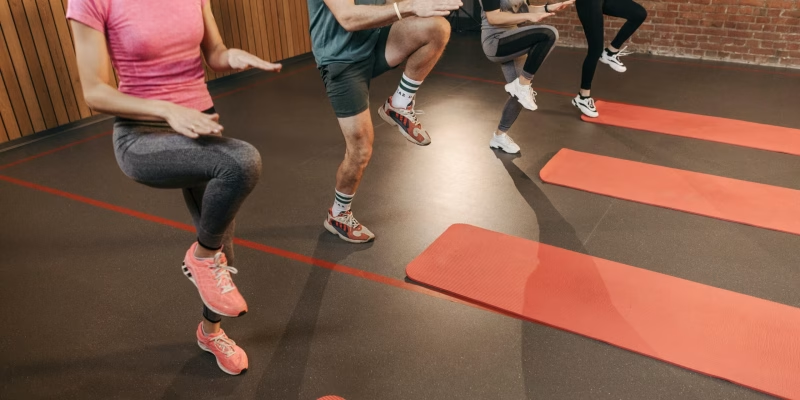
This is where a structured hiit training workout becomes incredibly relevant for the modern Singaporean lifestyle. HIIT replicates the same type of short, intense stress bursts that people experience in daily life. It trains the body to handle micro fatigue, which refers to the brief physical and neural overload that occurs during these sudden moments.
Micro fatigue conditioning is one of the most overlooked benefits of HIIT. While many people associate HIIT with calorie burn or physical transformation, its deeper value lies in preparing the body to stay functional and responsive during quick, unpredictable stress peaks. The modern world does not demand long bouts of endurance as often as it demands rapid acceleration, fast deceleration, immediate coordination, and instant readiness. HIIT teaches you exactly that.
Understanding Micro Fatigue in Daily Life
Micro fatigue occurs when the body faces a very short, unexpected challenge that forces muscles and the nervous system to react before conscious thought kicks in. These episodes last less than a few seconds, but they place intense demands on stability, breathing control, and coordination.
Common examples of micro fatigue in Singapore
• Rushing across a road as the pedestrian light starts blinking
• Quickly carrying groceries when the rain suddenly begins
• Climbing stairs fast to catch a bus
• Avoiding obstacles in a crowded mall
• Bending unexpectedly to catch something falling
• Managing sudden pushes during peak hour travel
These are small scenarios, but each one forces the body into quick overdrive. If the body is not conditioned to handle these quick energy surges, micro fatigue accumulates and creates a sense of physical heaviness.
HIIT mirrors this pattern perfectly. Each interval represents a short stress demand, followed by a partial recovery window that prepares the body for the next wave. Over time, this reshapes not just your strength but also the way your body handles micro stresses throughout the day.
How HIIT Builds Micro Fatigue Resilience
HIIT works in cycles. These cycles condition the body to tolerate rapid fatigue spikes and recover quickly. The neuromuscular system, cardiovascular system, and mental processing all undergo rapid adaptation.
Neuromuscular adaptation
HIIT requires the muscles to contract explosively. The nervous system must communicate instantly with the muscle fibre, which enhances speed, precision, and coordination. This makes the body more stable during unexpected movements.
Cardiovascular shock absorption
Short bursts of intensity increase heart rate rapidly. The cardiovascular system learns to stabilise faster, which reduces breathlessness during sudden urban stress moments.
Motor pattern recruitment
Different intervals activate different muscle groups. This improves whole body responsiveness, making daily micro movements feel smoother and less stressful.
Micro recovery skill
The body becomes more efficient at recovering during short breaks. This builds micro resilience, the ability to reset quickly after a burst of effort.
Why This Matters More in Fast Cities like Singapore
Singapore is a compact urban environment where people constantly move at a brisk pace. Even simple tasks require quick timing. You transition from one environment to another dozens of times daily.
High density movement
Crowds require fast navigation, sudden stops, and quick footwork. Micro fatigue conditioning prevents sluggish responses and improves safety.
Temperature variability
Going from intense heat outdoors to cool indoor temperatures repeatedly stresses the body. HIIT improves circulatory balance, helping the body stabilise quickly.
Time pressure
Singaporeans often rush between commitments. This rush creates small stress spikes throughout the day, which are easier to manage with HIIT conditioning.
Urban obstacles
Escalators, corners, slopes, MRT gaps, and changing surfaces require quick, precise movement. HIIT helps with coordination and balance under sudden demand.
Micro Fatigue and Posture Control
Many micro stresses come from posture breakdown. When the body collapses slightly due to tiredness or long sitting hours, small stress events feel heavier.
HIIT strengthens the stabiliser muscles responsible for maintaining posture during sudden movements.
Benefits include
• Faster alignment correction
• Better spinal support
• Less energy used for everyday actions
• Reduced risk of minor strains
• Quicker reaction to slipping or tripping
Micro fatigue conditioning creates a responsive body that corrects itself automatically.
How HIIT Trains the Mind to Handle Micro Stress
HIIT is not just physical. It builds mental resilience too.
Rapid decision making
During an intense interval, your brain calculates pace, form, and breathing in seconds. This improves mental agility in daily tasks.
Pressure tolerance
Learning to function under short bursts of intensity trains your mind not to panic or freeze during stressful moments.
Rhythm awareness
HIIT teaches you to anticipate the next phase. This ability transfers to better moment to moment awareness in real life.
Internal sensing
You become better at listening to your body. This reduces wasted energy during daily micro stresses.
Micro Fatigue and Breathing Efficiency
Breathing control is often the first thing people lose during sudden stress. HIIT improves breathing efficiency by teaching the lungs to handle rapid shifts in oxygen demand.
Improved breath transitions
You learn to switch between deep breathing and short breaths smoothly.
Less breathlessness
Urban activities like climbing stairs or rushing for transport feel easier.
Better diaphragm engagement
HIIT strengthens the diaphragm, helping you recover quickly after small bursts of effort.
Why Structured Classes Create Better Micro Fatigue Training
Although self guided HIIT is helpful, structured environments offer superior micro fatigue conditioning. This is especially true in well designed spaces like True Fitness Singapore where sessions include controlled sequencing and interval timing.
Professional interval design
Instructors plan intervals that alternate between muscle types, forcing the body to handle different forms of micro fatigue.
Safe intensity peaks
You push hard, but never beyond safe limits. This makes micro fatigue training sustainable.
Rhythm and timing cues
Structured classes include controlled pacing which sharpens internal timing and reduces response lag.
Guided form adjustments
Better form reduces micro fatigue accumulation and prevents sloppy movement patterns.
Real Life Benefits of Micro Fatigue Conditioning
Even though micro fatigue may seem like a small concept, its benefits are substantial in daily life.
More efficient movement
You move with less effort, saving energy throughout the day.
Reduced midday burnout
Short muscle stressors feel easier, leading to better overall energy levels.
Lower injury risk
Urban micro movements suddenly feel more stable and coordinated.
Better emotional regulation
Handling physical micro stress trains the nervous system to stay calm during emotional micro stress moments.
Enhanced performance during urgent tasks
Whether carrying heavy items, climbing stairs quickly, or catching public transport, your body reacts faster.
Micro Fatigue Signals You Might Not Notice
Most people ignore micro fatigue signs because they feel minor. But these signs indicate your body needs conditioning.
Common overlooked signals
• Slight trembling during fast movement
• Losing balance for a split second
• Heavy breathing after short effort
• Back stiffness after bending quickly
• Slow reaction while navigating crowds
• Difficulty transitioning between sitting and standing
• Feeling mentally foggy after quick physical tasks
HIIT helps eliminate these issues by resetting your micro stress tolerance.
How to Get the Most Out of HIIT for Micro Fatigue Conditioning
To see real results, consistency and proper technique matter.
Focus on precise movement
Sloppy movement reduces reflex conditioning.
Do not skip rest intervals
Micro recovery is part of the training.
Include directional variety
Forward, lateral, and rotational movements improve real world responsiveness.
Keep sessions short but intense
Intensity trains micro fatigue better than duration.
Prioritise body awareness
Listening to your internal rhythm enhances adaptation.
FAQ
Q1. How is micro fatigue different from normal fatigue?
Micro fatigue is short term strain that lasts seconds, while normal fatigue builds over time. HIIT focuses heavily on improving micro fatigue resilience.
Q2. Can micro fatigue training help prevent slips or falls?
Yes. Faster neuromuscular responses help the body stabilise almost instantly, reducing the risk of sudden imbalance.
Q3. Does HIIT help with stress at work?
Indirectly, yes. When your body handles physical micro stress better, your nervous system becomes more stable. This can reduce emotional overreaction during hectic workdays.
Q4. How often should I train to see improvements in micro fatigue?
Two to three HIIT sessions a week are enough for most people to notice smoother movement and faster recovery from everyday micro stresses.
Q5. Is micro fatigue conditioning suitable for people who sit long hours?
Absolutely. People with sedentary jobs often experience micro fatigue more intensely, and HIIT helps counteract this stiffness and slow response.